Daily vehicle access, household entry, storage, noise, security, and a trapped vehicle are common priorities.

Get practical help for a garage door that is stuck, noisy, crooked, slow, reversing, not closing securely, or no longer responding to its opener. Surrey Garage Door supports homes, townhomes, strata contacts, property managers, and small commercial properties in and around Guildford Town Centre.
If the door is crooked, unusually heavy, hanging by one side, visibly off track, or has a loose cable, stop using the opener. If the door moves normally by hand but the motor, remote, keypad, wall control, or safety sensors fail, the problem may be opener-related. Describe the exact symptom and whether the door is open, closed, or blocking access when you request service.
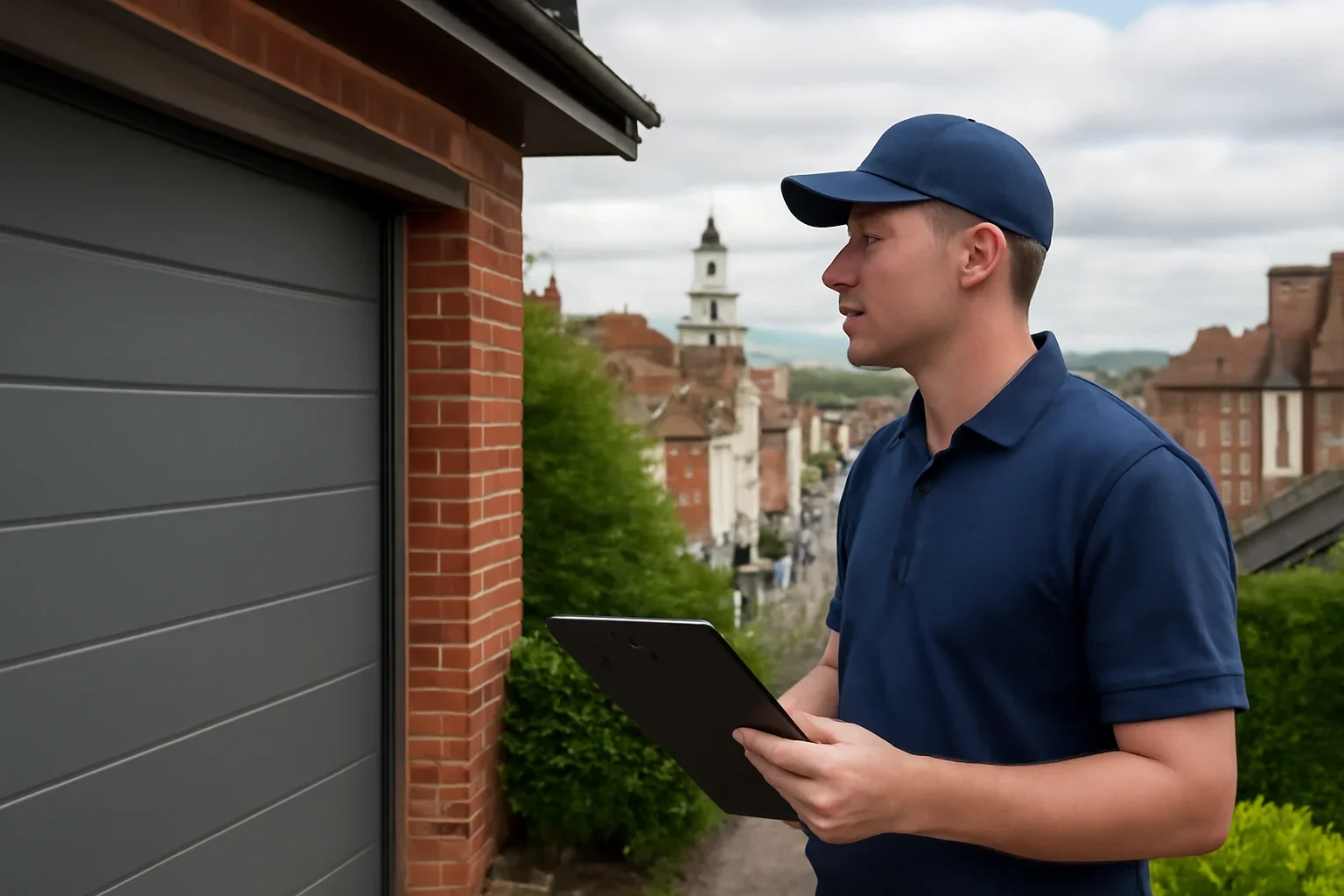

Guildford Town Centre is centred around the 104 Avenue and 152 Street area, with major retail activity, frequent transit movement, multi-family housing, townhomes, established residential streets, and commercial properties nearby. The shopping centre is the best-known landmark, but local repair needs also come from the surrounding garages, shared-access areas, storage spaces, and service doors.
That mix matters when planning a repair. A single-family garage may involve a trapped vehicle or daily household entry. A strata or shared door may affect several users. A small commercial or storage door may interrupt staff access, deliveries, tools, or secure closing.
For wider neighbourhood information, visit garage door service in Guildford. For citywide options, compare residential garage door repair and commercial garage door repair in Surrey.
You do not need to identify the failed part. A clear description of what changed is more useful.
Start with the symptom rather than guessing the part. These service paths cover the most common mechanical, opener, access, sealing, and long-term planning needs.
Best for a motor that hums or clicks, a door that reverses, flashing sensor lights, remote or keypad failure, wall-control problems, and inconsistent powered operation.
View opener repair 02Best for a loud bang, visible spring gap, unusually heavy door, sudden drop, opener strain, or a door that no longer stays balanced.
View spring repair 03Best for a loose or tangled cable, one side lifting before the other, a crooked door, or movement that looks unstable.
View cable repair 04Best for scraping, grinding, shaking, repeated binding, a roller outside the track, bent track, or a door that jams at the same point.
View track repair 05Best for dented, cracked, bent, or misaligned sections that affect appearance, sealing, hinge movement, or safe travel.
View panel repair 06Best for noisy operation, loose hardware, dry rollers or hinges, inconsistent sensors, weather-seal wear, and doors that need preventive attention.
View maintenanceSafety note: Do not force a door that is heavy, crooked, hanging unevenly, off track, or showing a loose cable. Use the emergency garage door repair page when the door is unsafe, stuck open, blocking access, or leaving the property unsecured.
This guide helps describe the issue accurately. The final diagnosis depends on the door’s balance, hardware, opener, controls, damage, and access conditions.
| What you notice | What may be involved | Best next step |
|---|---|---|
| Door reverses or will not close | Safety sensors, obstruction, travel limits, force settings, track resistance, or seal drag. | Check for a visible obstruction, then request opener and sensor troubleshooting. |
| Motor runs but the door barely moves | Broken or weak spring, opener strain, trolley problem, poor balance, or mechanical resistance. | Stop repeated attempts and have the door balance and opener checked together. |
| Door is heavy, crooked, or drops quickly | Spring, cable, drum, bracket, roller, or balance problem. | Stop operating the door and request spring, cable, and lift-system diagnosis. |
| Remote or keypad stops working | Battery, programming, receiver, range, wall-control lock, keypad, or opener issue. | Note whether the wall control still works and whether the opener lights respond. |
| Grinding, scraping, or shaking | Rollers, hinges, tracks, loose hardware, opener wear, or door misalignment. | Book service before friction damages panels, tracks, or lifting parts. |
| Water, drafts, leaves, or light enter | Bottom seal, side seals, top seal, floor slope, panel damage, or uneven closing. | Review weatherstripping and seal repair. |
| Door has repeated failures | Aging major parts, poor opener match, damaged panels, high-cycle wear, or outdated hardware. | Compare repair, maintenance, and garage door replacement before spending again. |
Guildford Town Centre is not one uniform property type. Service planning should reflect the door’s users, cycle frequency, access rules, security role, and surrounding space.
Daily vehicle access, household entry, storage, noise, security, and a trapped vehicle are common priorities.
Shared rules, remotes, keypads, sensors, visitor access, underground parking, and reliable closing may need coordination.
Staff entry, tools, deliveries, stock, parking, opening hours, and secure closing can determine urgency.
Repeated cycling, worn hardware, outdated controls, poor seals, and previous repairs may change the repair-versus-replacement decision.
A good first conversation reduces guesswork and helps identify the right service category before parts or replacement options are discussed.
Share what changed, what the door sounds like, where it stops, and whether the problem is constant or intermittent.
Confirm whether a vehicle, shared garage, tenant, delivery, business, storage area, or property security is affected.
Door balance, springs, cables, tracks, rollers, hinges, panels, opener, controls, sensors, and seals should be considered together.
Safe travel, balance, closing, auto-reverse, controls, security, and any remaining wear should be reviewed before sign-off.

A repair may be the practical choice when the door is structurally sound and the problem is limited to a serviceable part, setting, opener, control, or seal. Replacement becomes more relevant when failures repeat, major panels are damaged, parts are obsolete, security is unreliable, or the door no longer suits the property.
A new opener will not correct a door that is too heavy, crooked, binding, or mechanically unsafe. The door should be balanced and move correctly before opener replacement or installation is treated as the solution.
Use the page that best matches the property location. Guildford Town Centre sits within the wider Guildford area and connects closely with other north and central Surrey communities.
The page separates opener, sensor, spring, cable, track, panel, seal, and replacement concerns instead of treating every symptom as the same repair.
Property type, door position, access impact, photos, visible damage, and opener behaviour help make the first conversation more productive.
Broader options include panel repair, weatherstripping, and preventive maintenance.
These answers cover the questions homeowners, strata contacts, property managers, and small businesses commonly need resolved before booking.
Note whether the door is stuck open, closed, or partway; stop using the opener if the door is heavy, crooked, off track, or has a loose cable; and explain whether a vehicle, shared entry, business, or property security is affected. Submit those details through the contact page.
An opener issue may involve remotes, keypads, wall controls, sensors, motor response, travel settings, or a door that reverses. A door-system issue is more likely when the door is unusually heavy, crooked, binding, off track, or has loose cables. Both systems should be checked when the motor strains against poor door movement.
Service requests can include shared-access doors, underground parking entries, remotes, keypads, safety sensors, openers, secure closing, and doors used by multiple residents. Share any access instructions, building-contact requirements, parking restrictions, and the number of users affected.
Same-day availability depends on scheduling, technician routing, the required parts, site access, and urgency. Clearly describe a door that is stuck open, blocking a vehicle, affecting shared access, or leaving the property unsecured so the situation can be assessed appropriately.
Minor noise does not always mean immediate failure, but grinding, scraping, shaking, sudden slowing, uneven travel, or opener strain should not be ignored. Continued operation can turn roller, track, balance, hinge, or opener wear into a larger repair.
Replacement may be more practical when the door has repeated major failures, severe panel or track damage, obsolete hardware, poor security, persistent sealing problems, or repair costs that no longer make sense for the door’s age and daily use.
Maintenance can identify loose hardware, worn rollers, dry hinges, track friction, balance changes, sensor issues, seal wear, and opener settings before they cause a larger failure. It cannot prevent every breakdown, but it can support smoother and more predictable operation.
Useful details include the door type and size, property type, exact symptom, visible damage, spring or opener setup, site access, urgency, and whether special parts may be needed. Review the pricing guidance page for the factors that can affect repair, maintenance, opener work, installation, and replacement.
The garage door FAQ page provides broader information about repairs, openers, springs, maintenance, installation, service preparation, and common next steps.
Share the door position, exact symptom, property type, access impact, visible damage, and whether the request is urgent. Surrey Garage Door can direct the issue toward opener repair, sensor troubleshooting, spring or cable work, track repair, panel service, weatherstripping, maintenance, installation, or replacement planning.