Describe the change
Share the sound, movement, door position, opener response, frequency of use, and whether the issue affects a home, strata property, rental, or business.

A garage door can keep operating while springs lose balance, rollers wear, cables begin to fray, seals flatten, or the opener works harder than it should. Surrey Garage Door provides preventive maintenance for homes, strata properties, rental buildings, workshops, service bays, and commercial doors throughout Surrey.
Book maintenance when the door still operates but has become louder, slower, rougher, uneven, or overdue for inspection. If it is stuck, crooked, hanging, unusually heavy, or has a loose cable or broken spring, stop using it and request repair instead of a routine tune-up.
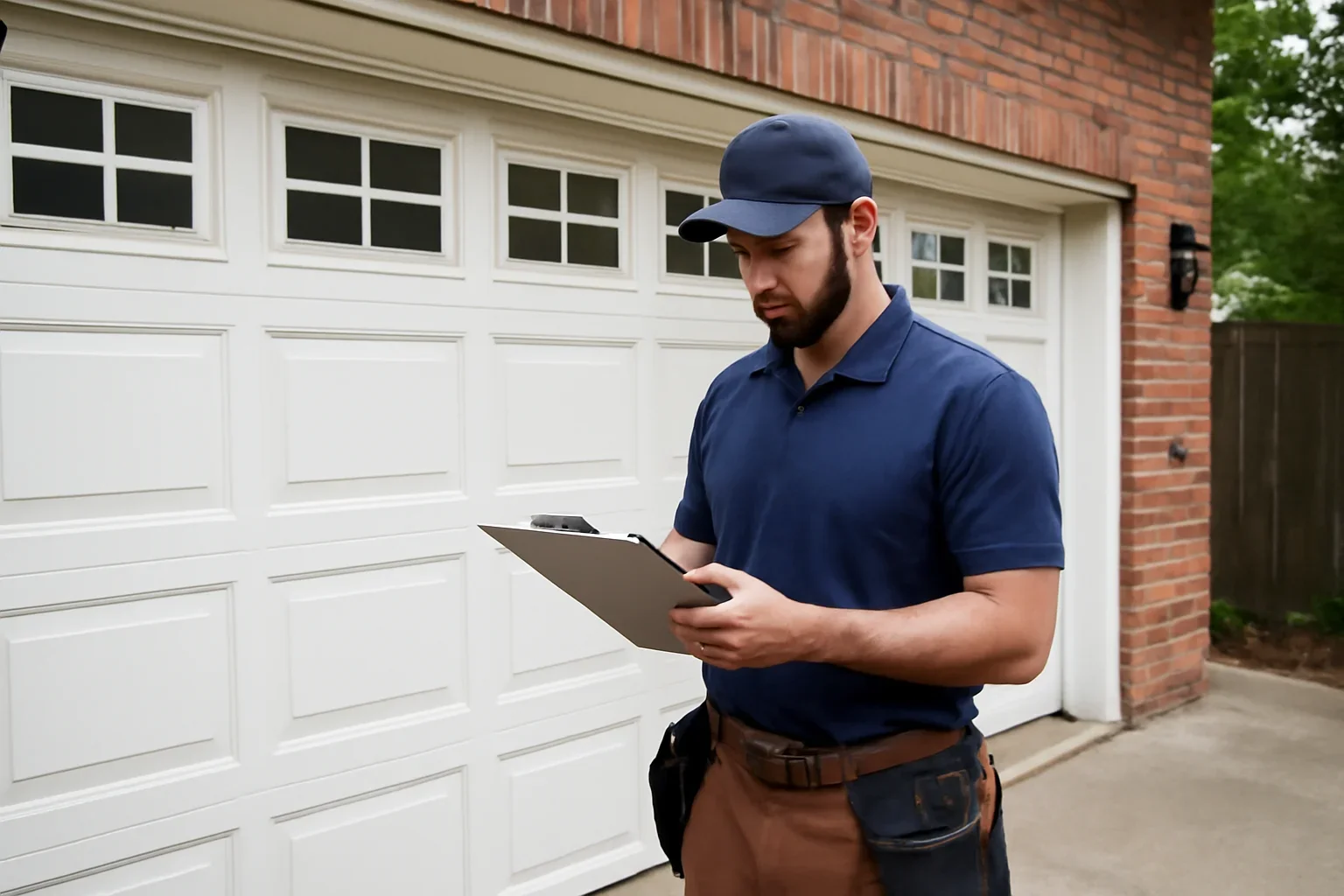

Preventive service is for a working garage door that needs inspection, lubrication where appropriate, adjustment, safety testing, or an honest review of developing wear. It should not be used to delay a necessary spring, cable, track, opener, or emergency repair.
If the door is already stuck or unsafe, use emergency garage door repair. For a known failed component, review residential garage door repair or commercial garage door repair.
A useful visit should look beyond one squeak. The goal is to understand how the full system lifts, guides, controls, and seals the door under real daily use.
Balance affects door weight, opener workload, closing control, and how evenly the door travels. A heavy or dropping door needs repair, not repeated opener use.
Review spring repair 02Cable condition, drum alignment, brackets, bearings, and fasteners are checked for wear that can contribute to crooked or unreliable lifting.
Review cable repair 03Scraping, shaking, vibration, and rough travel can point to worn rollers, hinge play, loose hardware, obstruction, or track alignment concerns.
Review track repair 04Travel limits, response, wall controls, remote operation, unusual motor strain, and the relationship between opener force and door balance are reviewed.
Review opener repair 05Sensor alignment, obstruction response, closing behaviour, and other safety functions should be tested as part of a complete maintenance visit.
Explore safety features 06Flattened, torn, or poorly fitted seals can allow drafts, daylight, rain, debris, and pests around a door that otherwise appears to close.
Review weatherstrippingSafety boundary: Do not attempt to adjust torsion springs, lift cables, bottom brackets, or a door that is hanging unevenly. These parts can be under significant tension and should be assessed as a repair issue.
Surrey is not one uniform service area. A frequently used family garage, a shared strata door, a weather-exposed residential door, and a commercial access door place different demands on springs, openers, rollers, seals, and controls.
Use these observations when booking. You do not need to diagnose the failed part; describing the symptom helps determine whether maintenance or repair is the safer next step.
| What you notice | What may be happening | Best next step |
|---|---|---|
| New squeaking, rattling, or rough movement | Dry pivot points, worn rollers, loose hardware, track friction, opener strain, or developing balance concerns | Book maintenance while the door still completes a normal cycle. |
| Door is slower or the opener sounds strained | Resistance, poor balance, aging rollers, opener wear, or travel settings that need review | Request a full system check rather than adjusting opener force without diagnosis. |
| Door reverses, stops, or needs repeated attempts | Sensor alignment, obstruction, travel-limit settings, track resistance, seal contact, or opener trouble | Have the safety system, travel, and opener response tested. |
| Daylight, drafts, water, or debris appear around the door | Worn bottom seal, perimeter gaps, floor contact, door alignment, or damaged weatherstripping | Request a closing-position and weatherstripping assessment. |
| Door feels heavy, sits crooked, or drops | Spring, cable, drum, bracket, or balance failure | Stop using the opener and book repair. This is beyond routine maintenance. |
| Door is stuck open, stuck closed, jammed, or hanging | Possible lift-system, track, opener, cable, spring, or impact-related failure | Use emergency garage door repair when access, security, or safety is affected. |
The process is designed to identify what is operating normally, what needs attention now, and what should be monitored or planned for later.
Share the sound, movement, door position, opener response, frequency of use, and whether the issue affects a home, strata property, rental, or business.
Springs, cables, rollers, tracks, hinges, brackets, opener controls, sensors, seals, balance, travel, and secure closing are reviewed together.
Service may include suitable lubrication, tightening, testing, minor adjustment, and confirmation of door and opener operation within the visit scope.
You receive practical guidance on what is safe to continue using, what needs repair, and what may become a future cost if wear continues.
Clear booking information helps match the visit to the property and avoids relying on a guessed diagnosis.
Preventive maintenance has limits. The safest and most cost-effective path depends on whether the door is operating normally, has a failed component, creates an urgent access problem, or has reached the point where repeated repairs no longer make sense.
Best for a working door with noise, roughness, overdue service, minor inconsistency, or developing wear.
Book a tune-upBest when a spring, cable, opener, track, roller, seal, panel, or control has already failed or become unsafe.
Review repair serviceBest when the door is stuck, unsecured, blocking access, hanging unevenly, or creating an immediate safety concern.
Request urgent helpWorth comparing when the door has major damage, poor sealing, repeated failures, outdated hardware, or ongoing repair costs.
Explore replacement optionsService planning should reflect door size, property use, weather exposure, access needs, opener type, and how often the door cycles. Select a neighbourhood page for more local context.
Good preventive service should help you understand the condition of the system without treating every observation as an immediate sale.
A useful visit should identify parts and functions that are currently serviceable, not only list possible future problems.
Recommendations should connect the observed symptom to balance, wear, safety, access, opener strain, sealing, or another specific concern.
When a part is worn but not yet failed, the next step should distinguish monitoring from priority repair or replacement planning.
Direct answers for Surrey homeowners, strata contacts, landlords, property managers, and businesses deciding whether to book preventive service.
There is no single schedule for every door. Frequency depends on door weight, cycle count, opener type, property use, weather exposure, age, and previous repairs. A heavily used family, strata, rental, or commercial door may need attention sooner than a lightly used residential door. Book an inspection when operation changes rather than waiting for a fixed date.
A useful tune-up typically includes a visual and operating inspection, suitable lubrication of approved moving points, hardware review, balance and travel checks, opener-response testing, safety-sensor and auto-reverse checks, seal review, and recommendations for parts showing wear. The exact work depends on the door and its condition.
Sometimes. Noise may come from dry pivot points, loose hardware, worn rollers, track friction, poor balance, or opener strain. Maintenance can address appropriate service items, but a failed roller, spring, cable, track, or opener component may require a separate repair.
No. A heavy, crooked, dropping, or uneven door can indicate a spring, cable, drum, bracket, or balance failure. Stop using the opener and request repair. Review spring repair and cable repair for the relevant warning signs.
A complete visit should review opener response, travel, controls, sensor alignment, auto-reverse behaviour, and whether poor door balance or mechanical resistance is making the opener work harder than it should.
No. Springs, cables, rollers, electronics, seals, and other parts still age and can fail. Maintenance helps identify many developing concerns earlier, supports safer operation, and gives you a better opportunity to plan repairs before access is interrupted.
Compare replacement when the door has major section damage, poor fit or sealing, repeated service calls, outdated hardware, ongoing opener strain, or repair costs that no longer provide good long-term value. Review garage door replacement in Surrey before paying for another short-term fix.
Share the neighbourhood, property type, door position, recent noise or movement change, opener response, and whether access or security is affected. Surrey Garage Door can help route the issue toward maintenance, opener service, component repair, weatherstripping, emergency support, or replacement planning.