Remote or keypad does not respond
If the wall control still works, check batteries, programming, signal range, the keypad, receiver response, and antenna condition before assuming the motor has failed.

When an opener stops responding, reverses unexpectedly, flashes its lights, strains, or runs without moving the door, the failed part is not always the motor. The cause may be a remote, keypad, wall control, photo-eye sensor, wire, travel setting, trolley, gear, belt, chain, rail, or a garage door that is too heavy for the opener.
Surrey Garage Door helps homeowners, landlords, strata contacts, property managers, workshops, and businesses separate an opener fault from a spring, cable, track, roller, or door-balance problem before replacement is recommended.
Start by noting which control works, what the opener lights are doing, and whether the door moves evenly. If the door is crooked, unusually heavy, jammed, or hard to lift, stop forcing the opener because the real problem may be the spring, cable, track, or door balance.

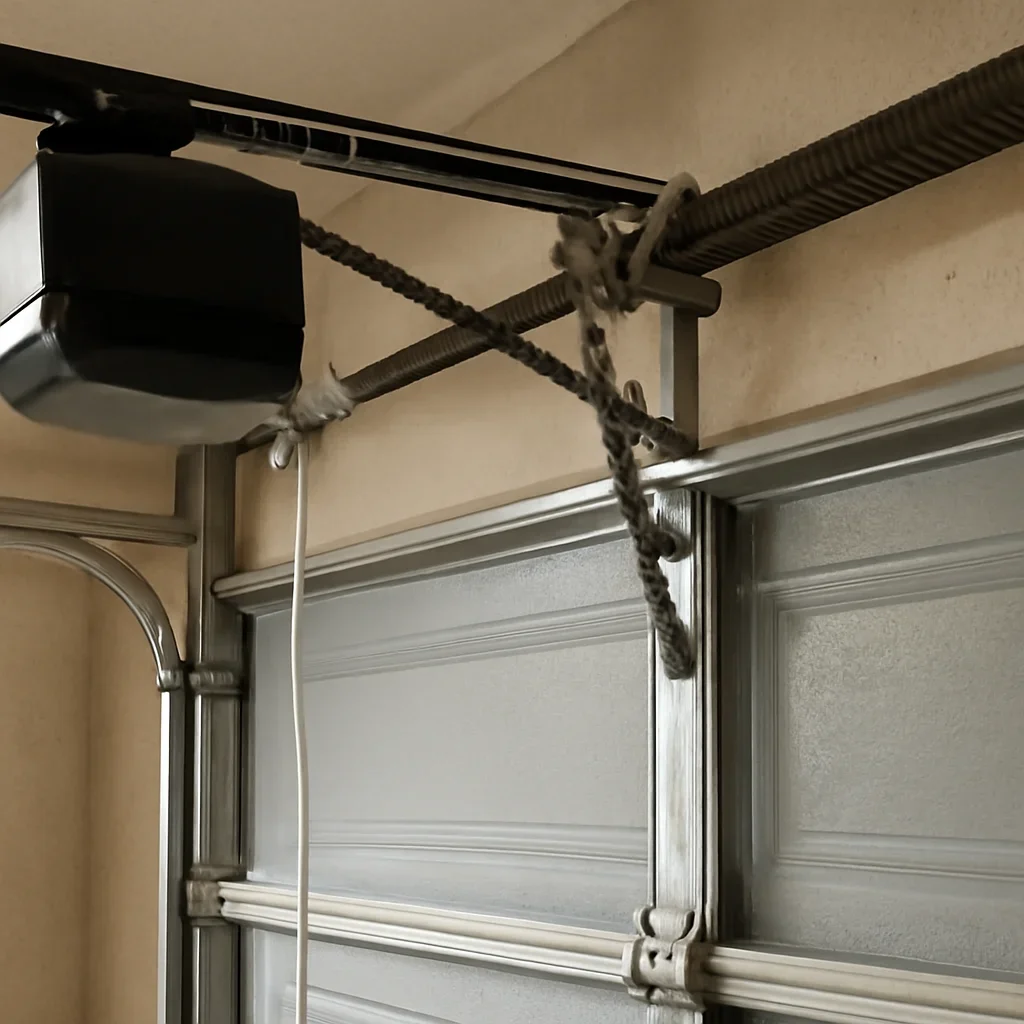
The opener guides a balanced garage door; it should not carry the full weight of a heavy or binding door. A useful diagnosis checks the opener and the mechanical door system together, especially when the motor is noisy, the door stops partway, or the trolley moves without lifting the door.
Surrey properties range from frequently used attached garages and townhome access to strata parking, detached workshops, and commercial bays. The same symptom can have a different cause depending on door size, opener age, ceiling layout, moisture around the sensor area, daily cycle count, and whether the garage is a main entrance.
For a broader door-system issue, review residential garage door repair or commercial garage door repair.
These symptom patterns help distinguish a control or sensor problem from a drive-system fault or a garage door that is placing too much load on the opener.
If the wall control still works, check batteries, programming, signal range, the keypad, receiver response, and antenna condition before assuming the motor has failed.
Photo-eye alignment, sensor wiring, stored items, track resistance, weather-seal drag, close limits, and opener force settings may need attention.
The opener may have a gear, trolley, carriage, belt, chain, capacitor, rail, or release-connection issue, or the door may be too heavy to move.
Travel settings, track resistance, roller wear, opener strain, sensor interruption, or uneven lifting can stop the cycle before the door reaches its limit.
Flashing lights commonly point to a sensor, wiring, alignment, or obstruction signal. The safety system should not be bypassed to force closure.
A loose drive, worn opener part, rough door movement, weak spring, cable issue, or poor balance can increase vibration and motor load.
If the door is crooked, hanging unevenly, unusually heavy, or stuck in the track, stop operating it. The safest next step may be spring repair, cable repair, or track repair rather than opener repair alone.
The goal is to find the actual failure point, confirm that the door is safe to move, and explain whether repair, adjustment, connected door service, or opener replacement is the practical next step.
Power supply, breaker response, wall control, remote, keypad, receiver, antenna, programming, lock mode, and visible wiring are checked.
Sensor lights, alignment, lens condition, brackets, wiring, moisture exposure, obstructions, and closing response are reviewed.
Motor response, gears, sprocket, belt or chain, trolley, carriage, rail, release connection, and movement noise are assessed.
Open and close limits, force response, secure closing position, auto-reverse behaviour, and unnecessary over-travel are checked.
Springs, cables, rollers, hinges, tracks, seals, and panel movement are considered so the opener is not blamed for mechanical resistance.
Repairability, safety functions, opener age, parts support, noise, reliability, and compatibility with the door are explained before a decision.
In many Surrey homes, the garage is used for commuting, family entry, storage, tools, bikes, deliveries, or a secondary suite. In strata, rental, workshop, and commercial settings, a failed opener can affect several users or interrupt vehicle access.
The answer depends on the failed component, opener condition, safety functions, parts support, reliability, noise, and whether the garage door itself is mechanically sound.
| What you are seeing | Likely direction | Why |
|---|---|---|
| Wall control works but remote or keypad does not | Accessory, programming, receiver, or signal diagnosis | The opener and door may still be functional when one access control has failed. |
| Door reverses or will not close | Sensor, wiring, travel, force, or resistance diagnosis | This behaviour often involves the safety system or physical resistance rather than a failed motor. |
| Motor runs but the trolley or door does not move correctly | Drive, gear, carriage, rail, release, and door-balance inspection | A repairable opener part or a mechanically heavy door may be the real cause. |
| Older opener has repeated faults, excessive noise, or limited support | Compare repair with new opener installation | Repeated repairs may not provide the reliability, safety functions, or access features the property now needs. |
| Door is heavy, crooked, scraping, or binding | Repair the door system before opener work | A new or repaired opener should not be used to compensate for spring, cable, roller, or track trouble. |
You do not need to identify the failed component. A few safe observations can help separate a control problem from a sensor, drive, power, or door-system issue.
Do not adjust springs, cables, bottom brackets, internal opener parts, or safety settings to force operation. For a door that is stuck open, stuck closed, unsafe, or blocking access, use emergency garage door repair in Surrey.
The process is designed to identify the actual failure, explain connected door issues, and give you a clear repair-or-replacement decision.
Share which control works, whether lights flash, what sounds you hear, and how far the door moves.
Explain your Surrey neighbourhood, property type, door size, and whether a vehicle, tenant, delivery, or business is blocked.
Controls, sensors, drive parts, settings, door balance, springs, cables, rollers, and tracks are considered together.
You receive practical guidance for opener repair, opener installation, maintenance, connected door repair, or emergency support.
You can still request service when the opener brand or model is unknown. A photo of the opener label, sensors, and door position may help.
Opener troubleshooting is available for residential streets, townhome and strata garages, rentals, workshops, commercial properties, and mixed-use access points across Surrey.
The most useful service explains what failed, what is still working, how the door itself affects the opener, and whether the proposed next step fits the age and condition of the equipment.
A remote, sensor, setting, gear, trolley, belt, chain, rail, or wiring issue should be distinguished from a full opener failure before replacement is discussed.
The opener should not mask a weak spring, damaged cable, rough roller, bent track, or unbalanced door. Connected problems are identified and explained.
The issue can be directed toward opener repair, opener installation, maintenance, emergency support, or a related door repair.
Clear answers for common remote, keypad, wall control, sensor, motor, drive, safety, and repair-versus-replacement questions in Surrey.
A remote can stop working because of weak batteries, lost programming, signal interference, a damaged remote, receiver trouble, or an opener that has lost power. If the wall control still operates the door, the problem is more likely to be in the remote, keypad, receiver, or programming than in the door itself.
The opener may be detecting an obstruction or too much resistance. Common causes include blocked or misaligned photo-eye sensors, loose sensor brackets, wiring trouble, incorrect travel limits, track resistance, weather-seal drag, or a door that is no longer moving freely.
The issue may involve the trolley, carriage, gear, belt, chain, rail, emergency-release connection, or a door that is too heavy for the opener to lift. The door balance and spring system should be checked before the motor is blamed.
Yes. The opener is designed to guide a properly balanced door, not carry the full door weight. A weak or broken spring, cable problem, rough rollers, or track resistance can overload gears, belts, chains, rails, trolleys, and the motor.
Repair may make sense when the opener is reasonably current, safe, and affected by one serviceable part, accessory, or setting. Replacement may be more practical when the unit is repeatedly failing, very noisy, missing current safety functions, incompatible with the door, or difficult to support with available parts.
Flashing lights commonly indicate a safety-sensor, wiring, alignment, or obstruction issue. Check for stored items, dirt, moisture, or a bumped sensor bracket. Do not bypass the safety system to force the door closed.
Yes. A useful opener diagnosis can include remotes, keypads, wall controls, receiver response, programming, wiring, sensor indicators, travel settings, and the opener drive. The exact repair depends on which controls work and how the door responds.
Treat the problem as urgent when the door is stuck open, stuck closed, blocking a vehicle, preventing business access, or moving in a crooked or unsafe way. Explain the access impact when booking so the correct service path can be identified.
Share which control works, whether lights flash, how the door moves, your Surrey neighbourhood, property type, and whether access is blocked. Surrey Garage Door can help route the problem toward opener repair, opener installation, spring or cable service, track repair, maintenance, or emergency support.