Door stuck open or closed
A jammed door can interrupt deliveries, vehicle access, secure parking, workshop use, or the movement of tools and equipment.

A failed commercial garage door can interrupt deliveries, prevent vehicle access, expose equipment, or leave a service opening unsecured. In Bear Creek Green Timbers, commercial repair requests may involve individual businesses, institutional properties, strata facilities, workshops, service areas, or mixed residential-commercial sites rather than one large industrial district.
Start by describing the door type, exact symptom, property use, and whether access or security is affected. That helps determine whether the problem belongs under commercial garage door repair, spring repair, opener repair, or another focused service.
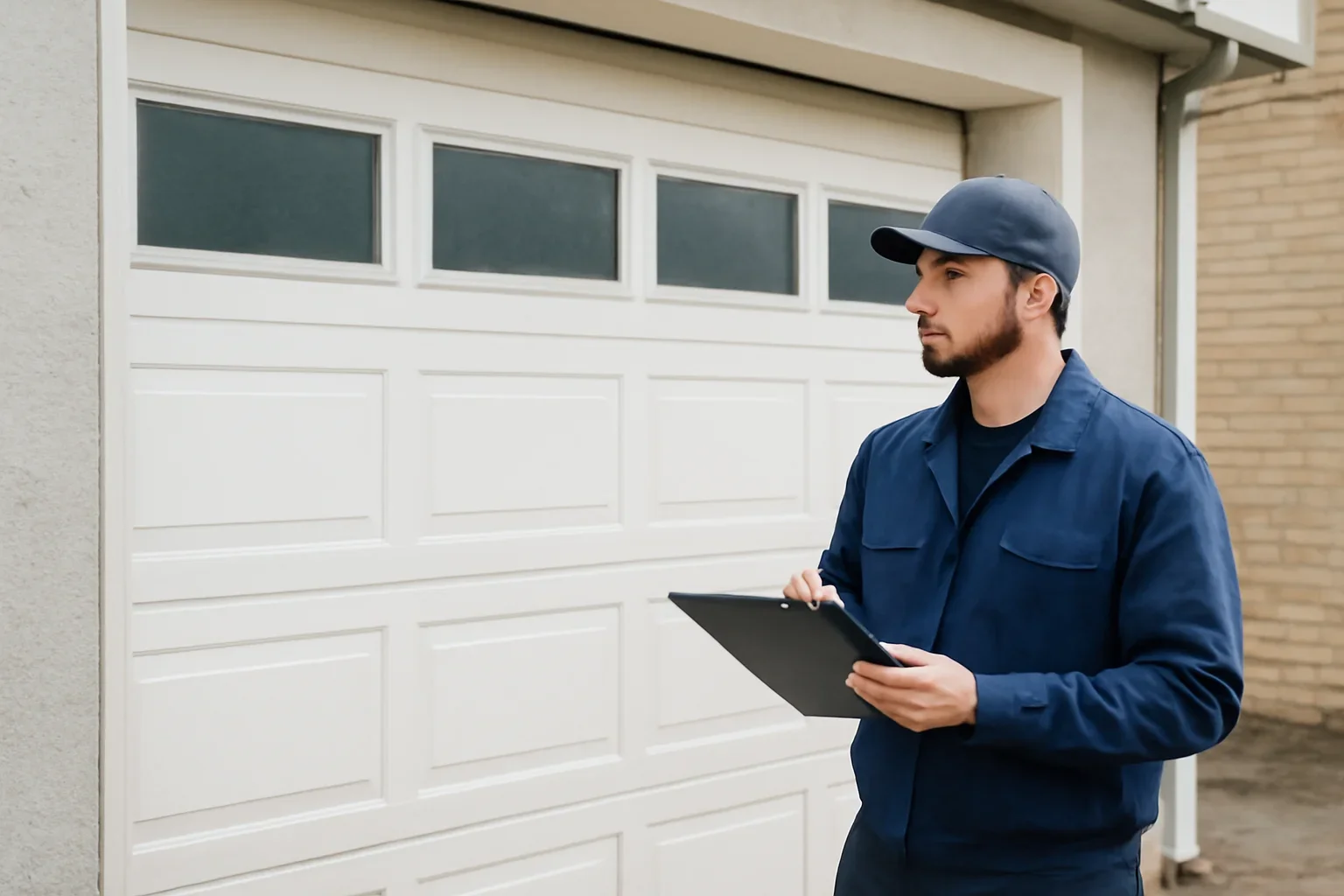
Keep staff, customers, vehicles, and equipment away from the opening. Do not pull loose cables, force the door through damaged tracks, or adjust springs and bottom brackets.

Bear Creek Green Timbers is known primarily for residential streets, townhomes, schools, parks, community facilities, and routes connecting different parts of central Surrey. Commercial overhead-door needs in the area are therefore likely to be tied to specific businesses, service buildings, strata facilities, institutional sites, workshops, or smaller mixed-use properties.
This makes the property type more useful than the neighbourhood name alone. A frequently used service door, secured parking entrance, workshop door, or light-commercial overhead door can have different operating and access requirements from a household garage.
State whether the door blocks deliveries, employee parking, equipment movement, customer access, or secure storage.
Doors that cycle repeatedly can show earlier wear in rollers, hinges, cables, springs, opener components, and controls.
Water entry, debris, corrosion, sensor interruption, and resistance near the opening may become more noticeable during Surrey’s wet seasons.
For the broader area overview, visit Bear Creek Green Timbers garage door services. For citywide commercial guidance, see commercial garage door repair in Surrey.
Similar symptoms can come from different components. The most useful starting point is what the door is doing, what type of opening it serves, and how the fault is affecting the property.
A jammed door can interrupt deliveries, vehicle access, secure parking, workshop use, or the movement of tools and equipment.
A door that lifts unevenly, falls, or will not remain open may have a spring, cable, drum, or counterbalance problem and should not be forced.
Inconsistent response can involve power, safety sensors, control wiring, limits, an operator under strain, or resistance elsewhere in the door.
Rough movement may be related to rollers, hinges, track alignment, loose hardware, operator strain, worn bearings, or poor door balance.
A damaged bottom seal, worn perimeter material, uneven floor, or door alignment problem can expose equipment and interior areas to moisture and debris.
Installation may be considered when damage, repeat repairs, security, opening size, operating frequency, insulation, or obsolete equipment makes repair less practical.
The assessment should connect the mechanical condition of the door with the way the property uses the opening. That avoids replacing parts without addressing balance, access, operating frequency, or another underlying problem.
Identify whether the issue affects deliveries, staff access, customer entry, vehicles, parking, storage, or security.
Review springs, cables, tracks, rollers, hinges, brackets, panels, seals, controls, safety devices, and operator components.
Separate an operator or control issue from door balance, structural damage, track alignment, worn hardware, or seal failure.
Confirm controlled travel, balance, limits, safety response, secure closing, and practical operation before the opening returns to use.
The phrase “commercial garage door” can describe several different systems. Providing the site context helps prevent a small-business service door, shared parkade entrance, workshop opening, or institutional overhead door from being treated as the same type of job.
Include business hours, delivery windows, vehicle requirements, customer access, the door’s operating frequency, and whether the opening can be temporarily taken out of service.
Confirm the authorized contact, access method, parking instructions, control location, contractor rules, and whether the fault affects every user or one entrance.
Provide site-entry procedures, permitted work times, vehicle or pedestrian controls, the door location, and the person authorized to approve the service.
Clear booking information helps identify the likely service route and reduces avoidable access delays. You do not need to diagnose the failed part yourself.
Use the contact page and describe the problem in plain language. The symptom, door type, property use, and operational impact are more helpful than guessing the component.

These answers help businesses, strata contacts, institutional representatives, and property managers choose a practical first step without attempting unsafe repairs.
Commercial repair is generally the appropriate starting point when an overhead, sectional, rolling, service, parking, or access door at a business or shared property is stuck, damaged, uneven, noisy, unreliable, or affecting operations. The inspection can then identify the specific component involved.
Restrict the area, protect the opening as safely as possible, and avoid pulling cables or forcing the door. Explain whether stock, tools, vehicles, staff areas, or the public are exposed when requesting service.
Same-day appointments may be available, but actual timing depends on technician routing, site access, the type of door, required parts, current scheduling, and the urgency of the problem. Provide complete details so the request can be assessed accurately.
Yes. An operator may struggle when the door is unbalanced, binding in the tracks, carrying damaged hardware, or meeting unexpected resistance. The door and operator should be considered together rather than assuming the motor is the only problem.
Consider safety, structural condition, operating frequency, repeat repair history, security, parts availability, operator compatibility, downtime, energy performance, and whether the existing system still suits the opening.
Include the authorized contact, service entrance, parking or loading instructions, gate or keypad process, permitted work hours, door identification, clearance limits, and whether the opening can be temporarily taken out of service.
Share the symptom, Bear Creek Green Timbers location, property type, current door position, operational impact, and access instructions. This helps identify the right service route and prepare for a clearer commercial repair discussion.
Phone: +1 (844) 822-2211
Email: info@surreygaragedoor.com
10362 King George Blvd
Surrey, BC V3T 2W5