Likely weatherstripping
- The door closes level across the opening.
- The rubber is torn, compressed, brittle, or missing.
- Small edge gaps admit light, air, leaves, or insects.
- The slab is reasonably even and drains away.

Water under the door, cold air around the edges, daylight at the corners, or leaves and pests inside the garage can point to worn weatherstripping. It can also mean the door is not meeting the opening correctly.
Surrey Garage Door helps homeowners, strata contacts, property managers, and businesses identify whether the practical fix is a bottom seal, perimeter weatherstripping, a threshold, door adjustment, track or panel repair, or broader replacement planning.
Start by noting exactly where the gap appears and what enters through it. A replacement seal is most effective when the door closes squarely, the bottom panel is sound, and the driveway or slab is not directing water toward the garage.
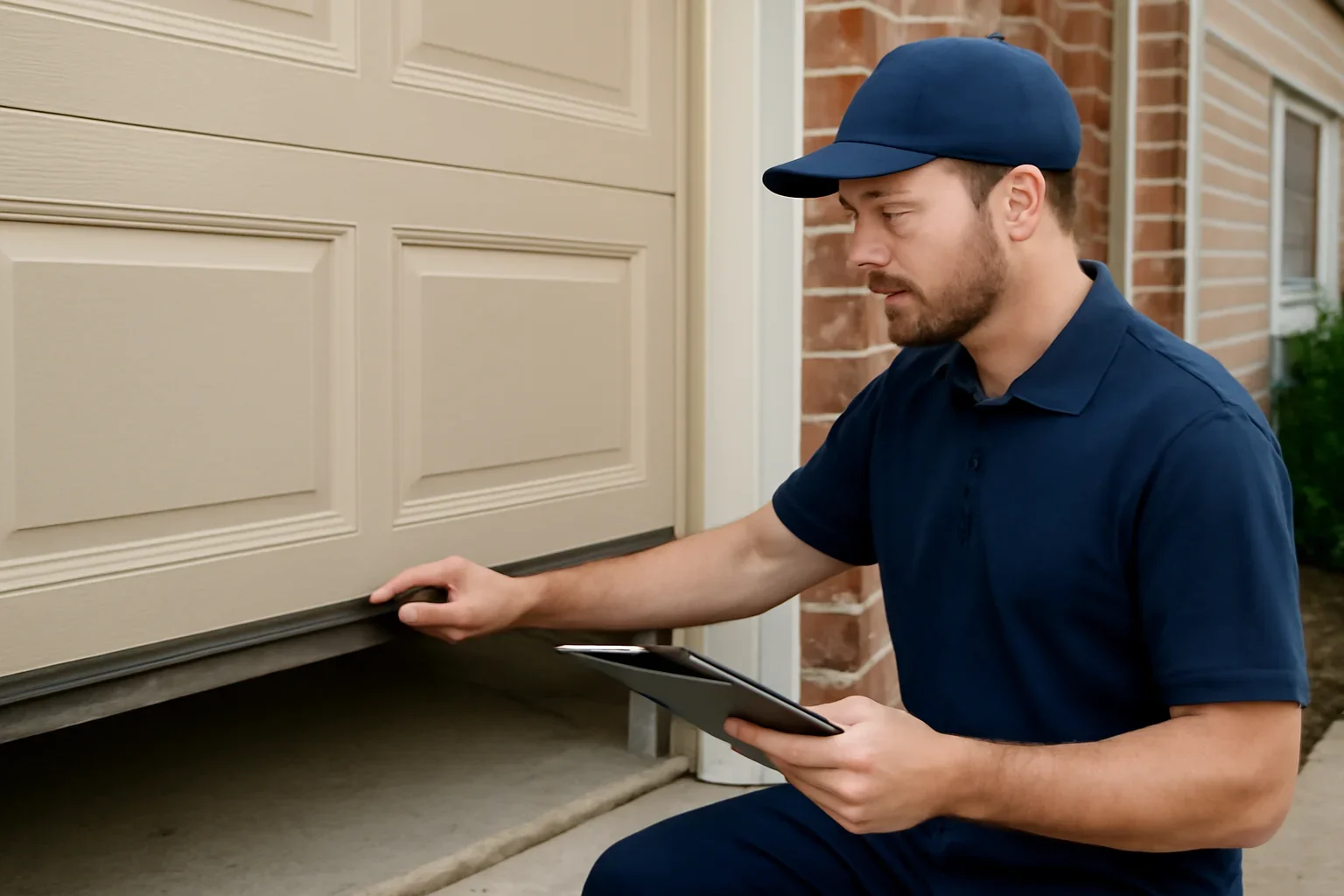
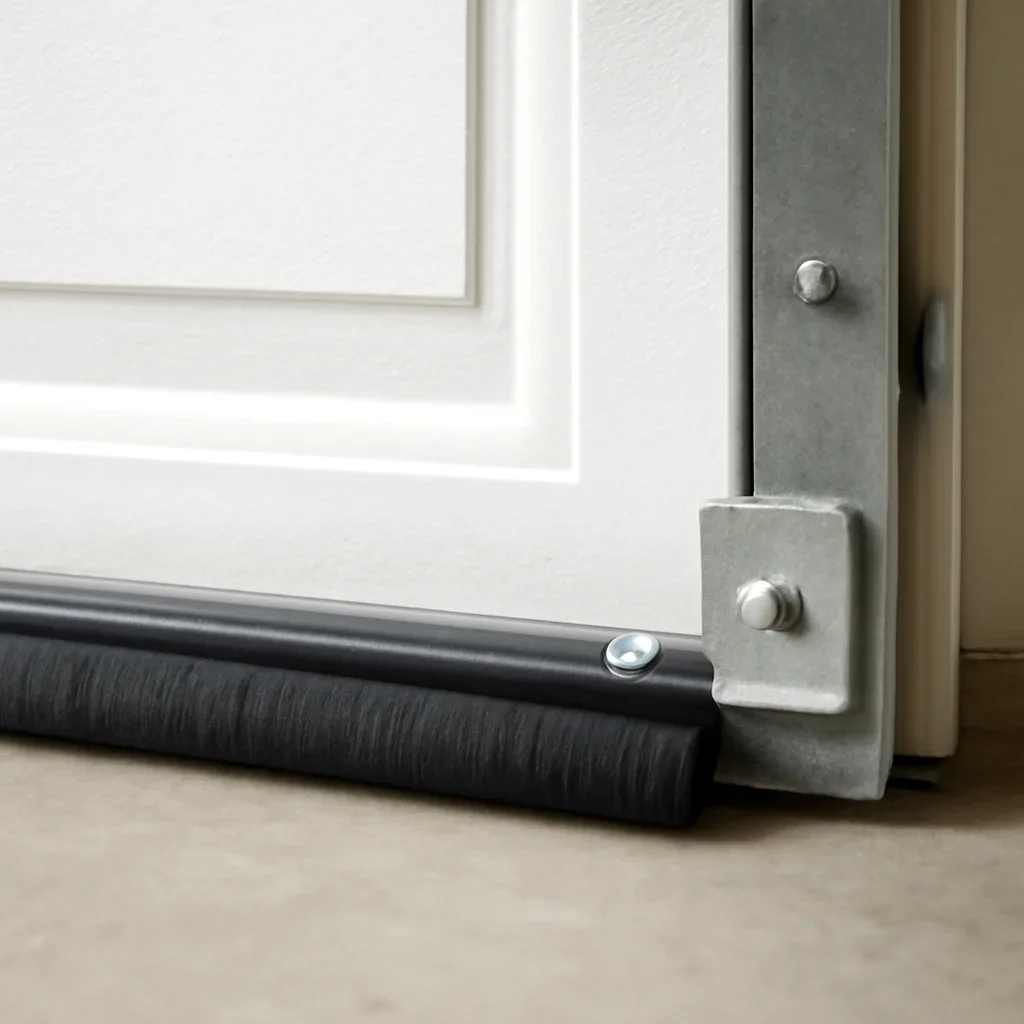
The location and shape of the gap usually reveal more than the age of the rubber. A uniform gap across the bottom may indicate a compressed seal or closing-height issue. One open corner may point to floor slope, a bent panel, cable imbalance, or track alignment.
Water can also reach the garage even when the seal is new. A driveway that falls toward the opening, a low slab corner, wind-driven rain, or water collecting against the threshold can overwhelm ordinary weatherstripping.
Weatherstripping is one part of the opening. These related service paths help match the repair to the seal, floor, door position, panel condition, and long-term value of the system.
Best when the bottom rubber is cracked, flattened, hardened, torn, missing, or no longer filling a consistent floor gap.
Request seal repair 02Useful when light, drafts, insects, leaves, or dust enter around the perimeter while the door still closes squarely.
Review maintenance 03Relevant when the door closes correctly but an uneven slab, low area, or inward water path leaves a bottom gap.
See pricing factors 04Needed when the door is crooked, rubbing, stopping high, binding, or meeting one side of the floor before the other.
View track repair 05Worth checking when a bent, rusted, damaged, or distorted bottom section prevents a new seal from sitting evenly.
View panel repair 06More practical when poor sealing is combined with extensive panel damage, corrosion, warping, repeated misalignment, or an outdated door.
Compare replacementIn Surrey, repeated rain, damp driveways, seasonal debris, and changing temperatures can make flattened seals and uneven floor contact easier to notice. The practical issue is not simply “keeping the garage warm.” Many garages also protect vehicles, bicycles, tools, stored household items, work equipment, or an interior entry to the home.

This distinction prevents unnecessary repeat work. A good seal cannot compensate for every floor, drainage, panel, or door-position problem.
Practical limitation: Weatherstripping can reduce water entry, but it cannot guarantee a dry garage when exterior grading, drainage, standing water, or a damaged opening continues to direct water inward.
Use the visible symptom to describe the problem clearly. The final service recommendation should still account for the door, floor, opening, and drainage conditions together.
| What you notice | What it may involve | Useful next step |
|---|---|---|
| Water runs under most of the door | Compressed bottom seal, closing-height issue, threshold, slab slope, or driveway drainage | Photograph the water path and bottom contact before requesting seal work. |
| Daylight shows at one lower corner | Uneven floor, crooked door, cable or track imbalance, bent panel, or poor seal compression | Request a fit and alignment check rather than only a replacement strip. |
| Drafts or debris enter around the sides | Worn perimeter trim, loose side seal, door spacing, or wind exposure | Ask for side and top weatherstripping review. |
| The door touches the floor and reverses | Seal drag, travel-limit setting, floor contact, sensor issue, or track resistance | Review garage door opener repair with the seal and fit. |
| Pests enter near the corners | Torn bottom seal, perimeter gap, damaged retainer, floor variation, or panel damage | Check both the seal profile and the physical opening at each corner. |
| A new seal still does not stop water | Threshold height, wind-driven rain, door alignment, low slab area, or exterior drainage | Reassess the water route instead of installing the same seal again. |
The purpose is to identify the entry point, confirm whether the door closes correctly, and explain what the selected repair can and cannot solve.
Share whether water, drafts, light, leaves, insects, or pests enter from the bottom, sides, top, or one corner.
Check the seal profile, retainer, perimeter trim, door level, bottom panel, tracks, travel limits, slab, and threshold.
Explain whether the next step is seal replacement, adjustment, maintenance, threshold review, panel repair, or replacement planning.
Confirm smooth travel, consistent floor contact, secure closing, opener response, and realistic water-control expectations.
Neighbourhood names alone do not determine the repair. What matters is whether the garage is attached or detached, how the driveway meets the slab, how much wind and rain reach the opening, and whether the space protects household storage, vehicles, tools, or business equipment.
Use the relevant neighbourhood page for broader repair and property context. The on-site seal recommendation should still be based on the individual opening.
Clear advice should identify the likely source, connected parts, realistic limits, and what information affected the recommendation.
These answers cover the most common questions about bottom seals, perimeter seals, water entry, thresholds, pests, drafts, and uneven floor contact.
Start by identifying the water route. The solution may involve a bottom seal, side or top weatherstripping, a threshold, door adjustment, or drainage attention when the driveway or slab directs water inward. A seal works best when the door closes level and meets the floor consistently.
No. A seal may fill a small consistent gap, but it should not be used to hide a door that is out of level, bent, off track, or closing unevenly. The mechanical or fit problem should be checked first.
The water may be coming from a low slab corner, a driveway that slopes toward the garage, wind-driven rain, an uneven threshold, a crooked door, or a seal profile that does not match the retainer and floor gap.
A bottom seal moves with the door and fills normal floor variation. A threshold stays on the floor and may help interrupt a water path or low gap. The choice depends on the door’s floor contact, drainage, clearance, and how water reaches the opening.
Yes. A sound bottom seal and properly positioned side and top seals can reduce entry points. Corner gaps, damaged panels, uneven concrete, or a poorly aligned door may still require additional correction.
It can if the new seal changes floor contact or creates excess resistance near the closed position. The door travel, force response, alignment, and safety system should be checked rather than increasing opener force without diagnosis.
Service life varies with material, sunlight, temperature changes, water exposure, floor friction, door use, and compression. Cracking, flattening, tearing, stiffness, shrinking, or visible gaps are more useful replacement indicators than age alone.
Share your Surrey location, property type, where the gap appears, what enters through it, whether the door closes evenly, and photos from inside with the door shut. Mention standing water, floor slope, panel damage, reversing, or rubbing.
Describe whether the issue is water, cold air, visible light, leaves, dust, insects, or pests. Include the gap location, door movement, floor condition, and whether the garage protects household storage, vehicles, tools, or business equipment.